Malala Yousafzai and Her Love for School
A schoolgirl from Pakistan's Swat Valley stood up for every girl's right to learn — and became the youngest Nobel Prize winner in history. Malala's true story of courage.
 MsWeb
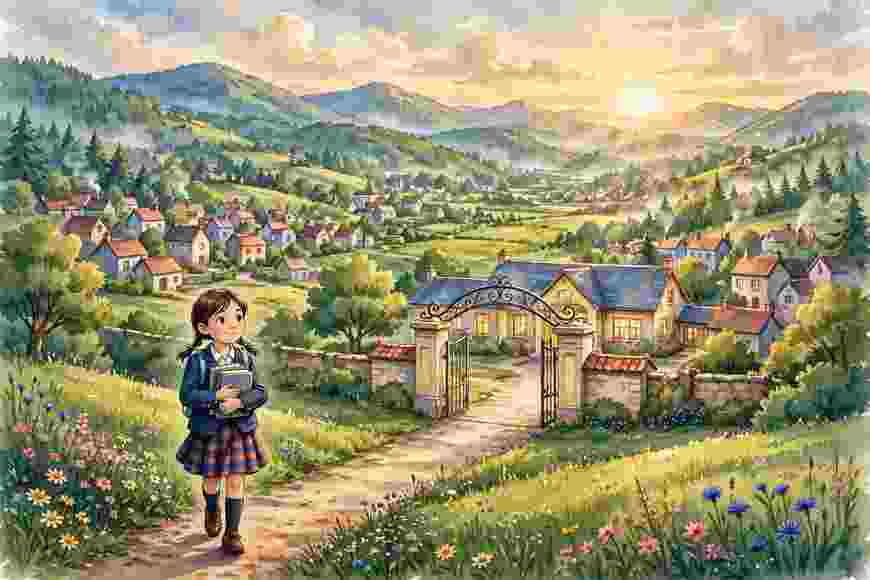
In the beautiful Swat Valley of Pakistan, a girl named Malala loved her school the way other children love playgrounds. Her father ran a small school, and Malala grew up among books, chalkboards, and the sound of children reciting lessons. She dreamed of becoming a doctor, a teacher — anything she wanted. Then, men with guns tried to take her dream away.
When the Schools Closed
When Malala was eleven, the Taliban took control of Swat and banned girls from going to school. They said girls did not need education. Malala could not accept this. She began writing a secret blog about her life, describing how sad the empty classrooms felt.
Soon she was speaking openly, on television and in newspapers, saying one simple thing: every girl has the right to go to school. She was just a child, but her voice carried the weight of millions of silent girls.
A Bullet Could Not Silence Her
On October 9, 2012, when Malala was fifteen, a gunman stopped her school bus and shot her. The whole world held its breath. She was flown to England for treatment, and against all odds, she survived.
Malala refused to be silenced. She recovered and spoke even louder, addressing the United Nations on her sixteenth birthday. In 2014, at just seventeen, she received the Nobel Peace Prize — the youngest winner in history.
Speaking for Millions
As Malala recovered in England, letters poured in from children all over the world. She realized her voice was now louder than ever, and she decided to use it for every girl who could not go to school. She started the Malala Fund with her father to help girls in Pakistan, Nigeria, Syria, and many other countries get an education.
On her sixteenth birthday, she stood before the United Nations in New York and gave a powerful speech. "One child, one teacher, one book, and one pen can change the world," she said. Millions of people watched, and leaders promised to help.
The Youngest Nobel Winner
In 2014, Malala received the Nobel Peace Prize at the age of seventeen — the youngest person ever to win it. But she did not stop there. She finished her own schooling and went on to study at Oxford University, one of the most famous universities in the world.
Today, Malala continues her work, reminding the world that more than a hundred million girls are still out of school. Her story proves that courage is not the absence of fear — it is speaking up even when you are afraid.
Malala keeps a simple message for children everywhere: pick up a book, because it is the most powerful weapon in the world. She believes that when girls are educated, whole families and nations grow stronger — and her own life is the proof.
Lesson of the Story
One child's voice can shake the world. Malala teaches us that education is the most powerful weapon we can use to change the world — and that no one, no matter how small, should ever be told their dreams do not matter.