Umar ibn al-Khattab and the Night Patrol
Read how Umar ibn al-Khattab (RA), the caliph of a vast empire, walked the streets of Madinah at night to care for his people. When he found a hungry mother and her children, he carried flour on his own back and cooked for them himself.
 MsWeb

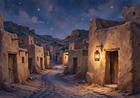
When Umar ibn al-Khattab (RA) became the leader of the Muslims, his lands stretched across many countries. He was one of the most powerful rulers in the world. But Umar never let power change him. He wore simple clothes, ate simple food, and spent his nights doing something no one expected: he walked the dark streets of Madinah, checking on his people to make sure no one was hungry or in trouble.
One of his companions, Aslam (RA), often walked with him on these night patrols. Umar would say that a ruler is like a shepherd, and a shepherd is responsible for every sheep in his care. If even one person in his lands went to sleep hungry while he had food, he feared he would be asked about it by God. This sense of responsibility kept him awake at night, long after the rest of the city had gone to sleep.
A Pot of Stones
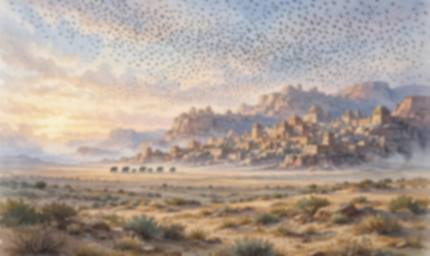
One night, far outside the city, Umar saw the glow of a fire. He hurried toward it and found a tent, and beside the fire sat a woman with small children crying around her. On the fire was a pot of boiling water — but when Umar looked closer, he saw that there was no food in the pot, only stones. The woman was boiling stones to trick her hungry children into thinking dinner was on its way, hoping they would fall asleep while they waited.
Umar's heart broke. He asked the woman why she had not gone to the caliph for help. She did not know who he was, and she answered bitterly that the caliph should have been looking after people like her himself. The children kept crying softly, and Umar felt as if a heavy stone had been placed on his own heart. He said nothing. He hurried back to the storehouse of the city, filled a sack with flour and cooking fat, and told Aslam to lift it onto his back. When Aslam offered to carry it for him, Umar refused, saying that no one could carry his responsibility for him on the Day of Judgment. And so the caliph of a great empire carried the heavy sack through the night on his own back.
Bread Baked by a Caliph
At the tent, Umar knelt by the fire himself and cooked for the children. He blew on the flames until his beard was dusty with ash, and soon the smell of fresh bread filled the air. The children ate until they were full, and then they laughed and played — the same children who had been crying with hunger. Umar stayed until he saw them happy, and only then did he leave, his heart finally at peace.
The next day, Umar asked the woman to come and see him. When she arrived and realized that the man who had cooked for her children was the caliph himself, she was frightened. But Umar only smiled kindly and made sure she and her children would be cared for from that day on. He arranged for food to reach her home every month, so her children would never cry from hunger again. He never scolded her for her harsh words, because he knew they had come from pain.
Lesson of the Story
The story of Umar teaches us what true leadership means. A real leader does not sit above the people — he serves them. Umar carried the flour himself because he knew that responsibility cannot be handed to someone else.
Each of us is a shepherd in our own way: of our family, our friends, or our classroom. Look around you — is someone hungry, sad, or in need? Do not wait for others to help. Like Umar, carry the load yourself, and do it with a kind heart.