The Blind Men and the Elephant
Six blind men each touch a different part of an elephant and argue about what it is. Each is partly right — and completely wrong.
 MsWeb
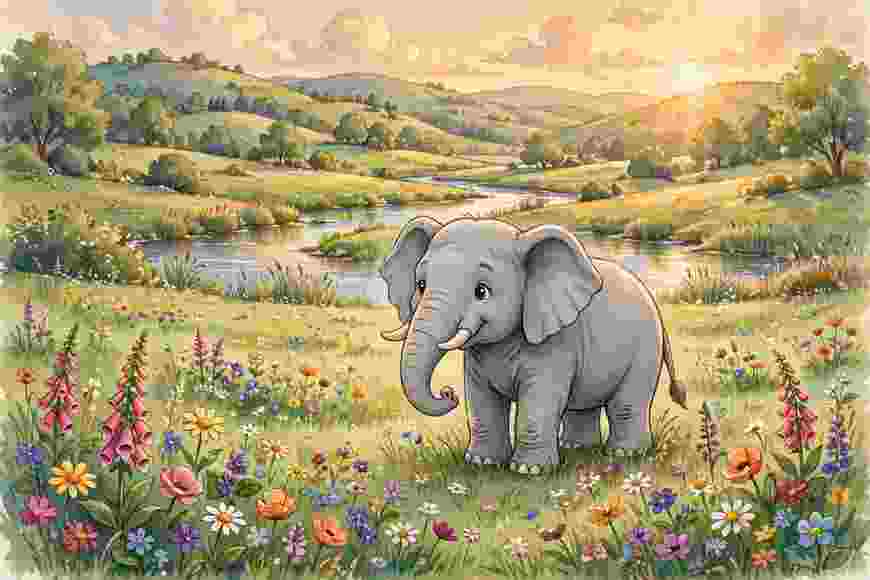
In a town in the old kingdom, six blind men had heard all their lives about a wonderful creature called an elephant, but none of them had ever touched one. One market day, the king's elephant was led through the town, and the six men hurried out, eager to finally know what an elephant was like.
Six Hands, Six Answers
The keeper, a kind-hearted man, smiled and led each of them forward in turn, letting them touch the great beast gently so as not to frighten it. The first man reached out with both hands and wrapped his arms around the elephant's broad, rough leg — he could not get his arms all the way around it, it was so thick. "The elephant is like a great pillar!" he declared, slapping the leg proudly as if he had settled the matter for good. The second man caught hold of the tail and ran his hand down the tuft. "No, no," he said, "the elephant is like a rope!" The third man felt the long trunk, curling and warm. "You are both wrong," he said. "It is like a thick snake!" The fourth man pressed his palms against the elephant's enormous side. "A wall!" he cried. "The elephant is a wall!" The fifth man felt the sharp tusk. "A spear — it is a spear!" And the sixth man, who had seized the flapping ear, shook his head at them all. "None of you understands. It is like a great fan!"
The Argument
And then the six men began to argue, right there in the market square, with the elephant swishing its tail peacefully above them all. "Pillar!" shouted the first. "Rope!" cried the second, tugging at the keeper's sleeve. "Snake! Wall! Spear! Fan!" The crowd gathered round, and soon half the town was laughing, while the other half took sides. Each man was certain, because each man had touched the elephant with his own hands, and nothing is more convincing than your own experience. Each man was honest — and each man was furious with the others for being so obviously wrong. The argument grew so loud that the king himself came to see what the shouting was about. He listened, and then he laughed gently — not cruelly, but with sadness. "My friends," he said, "you are all right, and you are all wrong. Each of you touched only one part, and you mistook the part for the whole. If you had shared what you felt instead of fighting about it, you would have understood the elephant together — and you would have done it as friends, instead of becoming bitter enemies."
Moral of the Story
Most arguments are like this: everyone has hold of one true piece and calls it the whole truth. Before you fight someone over who is right, ask what part of the elephant they are touching. Wisdom begins when we stop shouting our part and start listening to the parts we have not yet felt.