The Selfish Merchant and the Well
A merchant owns the only well in a drought-struck village and refuses to share its water. When his own well runs dry, he learns what his selfishness cost him.
 MsWeb
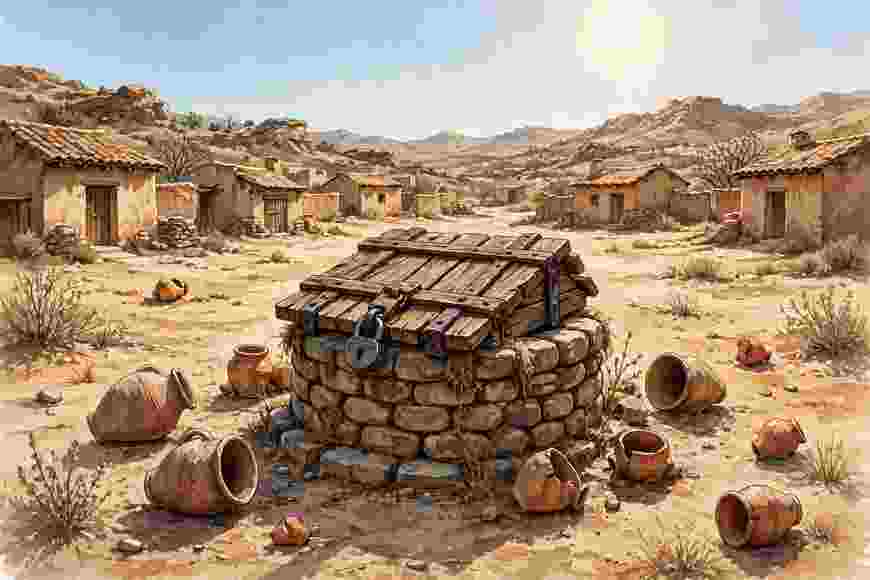
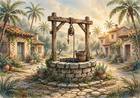
In a dry valley where rain came rarely, there was a village of fifty families, and only one well — a deep, sweet well that belonged to a merchant named Rahim. When the rains failed two years in a row, every other well in the valley dried up. Only Rahim's well still gave water.
Water for a Price
The villagers came to Rahim's door. "Please," they said, "let us draw water for our children. We will pay whatever is fair." But Rahim saw his chance. He charged them ten times what the water was worth, and when a poor widow with four small children came to his door, her hands shaking as she held out a single small coin, he laughed and turned her away. "Come back when you have real money," he said. The widow pleaded for a little water on credit, just enough to keep her children alive through the night, but Rahim only shook his head. "A well is a business," he told his wife afterward. "Kindness does not fill the money box." His wife said nothing, but that night she could not sleep, thinking of the children's thirsty faces. The widow's children went thirsty that night, and the whole village whispered about Rahim's hard heart. But Rahim counted his coins and felt clever.
The Well Runs Dry
Then one morning, Rahim's own rope came up empty. He lowered it again and again — nothing but damp rope and the echo of his own breathing from the dark below. The drought had finally reached even his deep well, the one he had bragged would never run dry. Rahim was terrified. For the first time in two years, the great merchant knew exactly how the widow had felt on his doorstep. He ran from house to house, begging for a cup of water. But doors closed in his face. The villagers remembered the widow's children. At last, the widow herself opened her door. She looked at the trembling merchant — the man who had refused her — and she did something he did not expect. She gave him water. "Why?" he asked, ashamed. "Because," she said, "I know what thirst feels like, and I would not wish it on anyone — not even you."
The Merchant's Shame
Rahim wept into his hands. That winter, when the rains returned and his well filled again, he did something the village had never seen: he removed the lock from his well and declared that every family could draw water freely. He never grew as rich as before, but he grew something far better — he grew the love of his neighbors. And whenever a traveler asked why the well had no lock, the children of the village would answer proudly, "Because it belongs to all of us now."
Moral of the Story
What you own is only truly yours when you are willing to share it. Selfishness builds a wall around your blessings, but generosity opens the door — and one day, when you are the thirsty one at the door, it is generosity you will be glad you practiced.